

Awareness Is The Beginning
Seeing things as they are is a superpower. It enables us to make the most of our situation and transform it to make our lives better.


Last weekend I was driving home from a wedding in Milwaukee. Most of the two-hour ride home was at half the speed limit. The roads were horrible, and the visibility was worse. Near-whiteout conditions multiply the risk of slippery roads. You aren’t sure of the road in front of you. You can’t make sudden adjustments. The only thing you can do is go slow. Your speed is dictated by the level of awareness you have.
The same is true in life. Awareness of our environment is essential. When things are heavy, awareness is the key to finding our way through the storm. When we find ourselves in challenging situations, we focus on the problem we face. The one variable we overlook is ourselves. We seek to change the world. We ignore the thing we have the most ability to change, our own thoughts and actions.
Your Spirit’s Path
“It is foolish to think that we will enter heaven without entering into ourselves.”
~St. Teresa of Avila
Your body is only one part of what carries you through life. Your spirit, your soul, the seat of your emotions and character, is more important. As you age, its importance only grows as your body fades. Spiritual growth is a rewarding life-long pursuit. Awareness earned through self-knowledge and inner reflection is essential for spiritual growth.
“The way out is in.”
~ Thich Nhat Hanh
Awareness is the heart of Buddhism. The first two of the four noble truths are:
Life is sub-optimal (suffering)
We ourselves are the source of it
The rest of the practice focuses on how we become aware of this and how to address the problem.
Make Space for Awareness
The first task is to make space to develop awareness. The endless options and distractions of the 21st Century make it hard. Develop a habit. Find moments in each day to stop the hustle and noise. Carve out an extended period of time each week to explore the undercurrent of your life.
Mindfulness and meditation are a great place to start. To become more aware of ourselves and our environment, we need to break out of our stream of thought. Once we have quieted our thoughts, we create space for observation. As a thought arises, we can examine the desires, beliefs, and assumptions operating beneath the surface.
There are multiple types of mediation you could explore.
Mindfulness meditation is a great place to start. It means focusing your attention on your physical senses and paying close attention to the details of the present. This can be done at any time. Doing the dishes, folding laundry, or even exercising offers a place to practice.
Zen Meditation is focused on being present, often involving sitting and paying attention to the breath. In it, you keep returning focus to the present moment. As thoughts arise, you let them go without chasing them.
Guided meditation is led by someone who leads you through an exercise of envisioning a scenario, progressive relaxation, body scans, or something else.
Transcendental meditation is repetitive chanting of a word or phrase to break the chain of thought to create space in your mind.
Regardless of your meditation style, your brain will continue to generate thoughts. As a thought arises, you recognize it as a thought, and not you. Then you can acknowledge that you recognized the thought. This creates distance and awareness that while our thoughts are generated by our brain, they are not us. We are that pure awareness that consumes our thoughts and sensory input.
Jesus’ called for us to repent, in his language - metatonia. Meta (beyond) + Noeo (to think/perceive): Literally, “to go beyond thinking,” meaning a profound shift in understanding and reasoning.
While best known as part of the Buddhist tradition, mindfulness and meditation are also a part of other major religions. Jesus often commands his disciples to watch and pray. The early Christian and Orthodox tradition of nepsis is the Christian equivalent of mindfulness. In the Jewish mystical tradition, devekut refers to a meditative state.
Go Deeper On What Remains
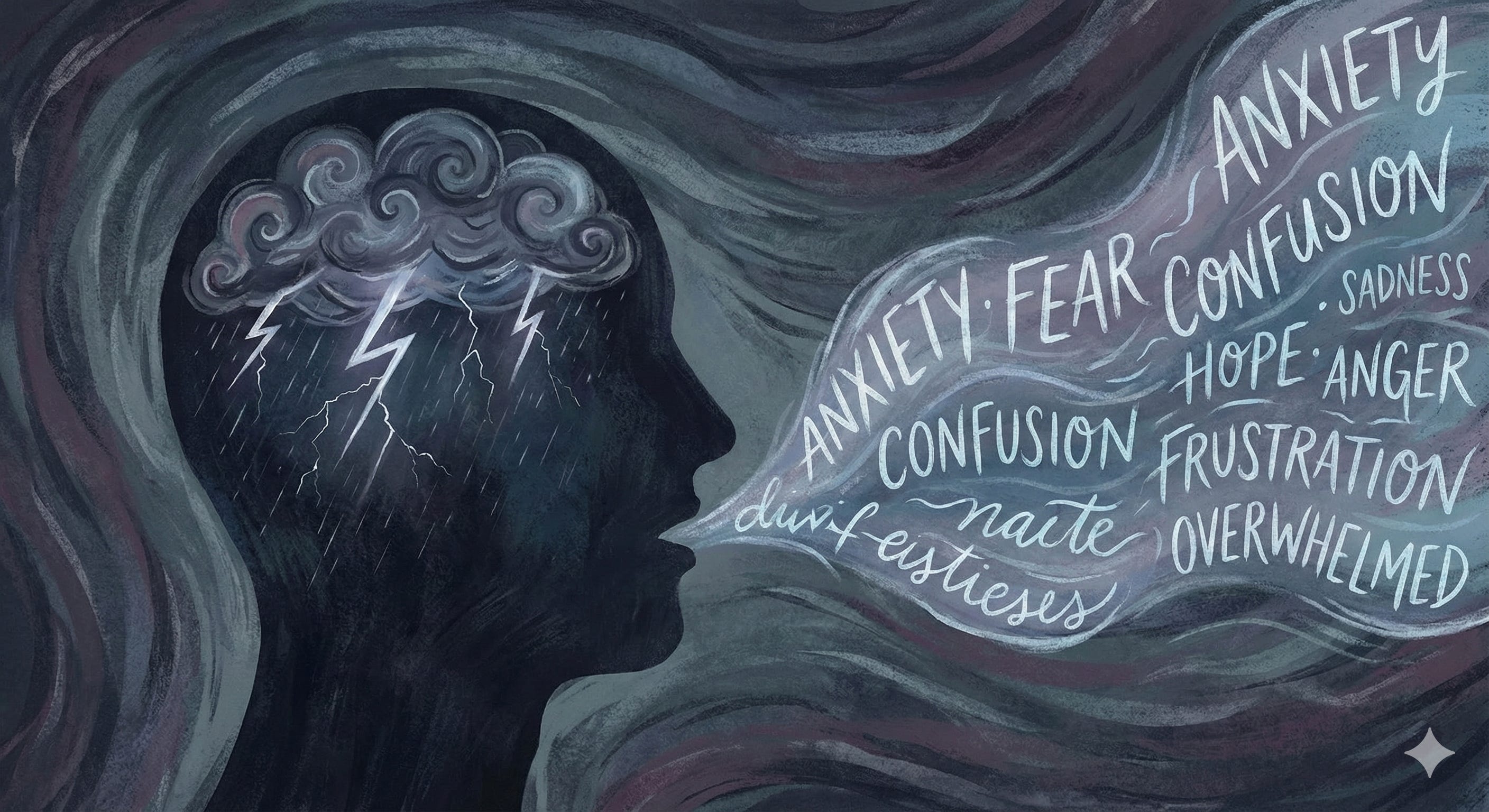
Once you’ve cleaned your spiritual windshield, you can work to get deeper. Our surface thoughts are the product of deeper beliefs and patterns. Asking ourselves the right questions is how we pull ourselves into the depths. It is only by finding a new perspective on the underlying beliefs that we can change our response.
Journaling helps us clarify. Thoughts and emotions swirl like so much smoke. Rarely taking enough form to understand and deal with fully. The practice of putting our thoughts into actual words and sentences helps. Forced to do this, it’s much easier to see the reality of what we are dealing with.
You don’t have to journey alone. It helps to have a community to practice with. Like journaling, it forces you to put your beliefs and thoughts into words. Other people’s guidance can offer perspectives to explore.
Know Your Inner Family

Modern psychology offers the practice of inner family systems, much like in the movie Inside Out. This is like the moment in meditation when you see your thoughts and emotions not as you, but simply as a part of you. As you identify with your pure awareness, it is easier to deal with it as you would a child or another family member.
Building self-awareness isn’t rocket science, but it can help you reach a place of greater peace. It is still work. Knowing the path is different from walking it. The result can’t be bought or gifted to you. True wisdom is something that is earned, not given.
Buddhism offers a metaphor of our mental formations as a garden that must be constantly tended to. As you begin your practice, your garden may be overgrown and in need of extensive work. As you progress, the space made by clearing out weeds will offer more room for the flowers and vegetables to thrive. Even then, a constant practice of weeding and pruning is needed.
Happy gardening!