

Marijuana: The Reality of the Risks and Rewards
The only way to minimize risks and maximize rewards of marijuana and other controlled substances is research and regulation. The best time to do that is as soon as possible.

Earlier this year, I found myself in the emergency room with my daughter. She had been vomiting nonstop for hours. She was racked with pain, struggling to breathe, and on the edge of being too exhausted to keep fighting. Over the last few years, this has happened multiple times, but never this bad.
The staff was struggling to get an IV line in her dehydrated veins as she tried to stay still. Suddenly, she became calm and looked straight through me, blinked, and shivered. I had a sense she was tuning out from the physical world and tuning into the spirit world as she approached death. Making it all worse was the thought that I was partially to blame.
I believe in dealing with the facts as I know them, and I parented that way. Early in their middle school years, I told my kids what I understood about marijuana. The cliff notes being:
It’s not as harmful as alcohol.
Like anything, its use could become problematic.
Most importantly, the brains of children aren’t prepared to deal with any mind-altering substance.
This was informed by my personal experience. I first tried it in high school, shortly after I started experimenting with alcohol. Of the two, marijuana was a clear favorite. I never got sick from it, or had a hangover, or felt depressed the next day. You could overdose on alcohol, but not marijuana. It even had medicinal purposes for patients having problems eating due to nausea.
For the next two decades, I was a near-daily user. I was highly functional. I built a good career in IT, raised three kids, and was a serial volunteer. Ever since I was a kid, I’ve been an intense person and have had problems focusing. Marijuana helped me be mellow, patient, and concentrate better.
As of late 2025, 24 states and the District of Columbia have legalized marijuana for recreational use.
Setting aside the frequency for a moment, there were still problematic aspects of my use. The potency of marijuana kept rising through the years. To the point that even one hit was too much. The increased strength sometimes triggered anxiety and made it more habit-forming. Being illegal, it was also expensive.
In my mid-30s, I had a manic episode and was diagnosed with bipolar disorder. I was prescribed lithium to help manage it. The lithium decreased my appetite for marijuana. It was clear my marijuana use was, in part, self-medicating my undiagnosed bipolar disorder. During the manic episode, I smoked a lot more. If it was helping me manage my symptoms during normal times, it makes sense that I would look to it more when my symptoms were worse.
I was diagnosed with ADHD a few years later. Stimulants are the go-to medication for ADHD. Many of them are controlled substances with their own risks. My doctor had me try a few. They worked, but they also negatively impacted my bipolar disorder, forcing me to quit. That experience of clarity of focus reminded me of what I liked about marijuana; it helped me focus.
Forty states, three territories and the District of Columbia allow the medical use of cannabis products as of June 26, 2025
Back to my daughter’s story. Her marijuana use started before her first year of high school. By this time, Michigan had legalized marijuana. You could drive a little over an hour and get marijuana products of all kinds.
The year before she started smoking, she was diagnosed with Type 1 Diabetes. She frequently had high blood sugar in the morning as well as chronic morning sickness. Her doctor attributed both to the dawn phenomenon, in which blood sugar spikes in the morning. The older she got, the worse the nausea was.
Over the last few years, my daughter made multiple trips to the emergency room for nonstop vomiting. We thought it was diabetes related. Every time we went in, she was in DKA, a lethal diabetic complication. Eventually, a nurse asked about drug use and made the connection. My daughter had CHS, Cannabinoid Hyperemesis Syndrome. The vomiting from CHS was preventing her from managing her diabetes and dehydrating her, speeding up the onset of DKA.
Scromiting - a combination of screaming and vomiting. This nickname refers to extreme episodes linked to cannabinoid hyperemesis syndrome (CHS)
The trip to the hospital at the start of the story was right after she quit smoking. Apparently, the price you pay for quitting is one last bout of uncontrollable vomiting. Like her previous trips, she was in the hospital for about a week. Most of that time in intensive care, hooked up to an IV, unable to eat or drink.
A few weeks later, most of the queasiness had passed. My daughter was grateful. Some people have problems for months after quitting. She hasn’t had any THC since the hospital visit we started the story with. Her morning sickness and other nausea symptoms are gone. All that remains is a sensitive gag reflex.
Over the last decade, my use has been lower than it was before. I spent long periods of time marijuana free for jobs, and even just for the hell of it. I switched to gummies to avoid smoking and to reliably take a small dose. Now I take about 2 mg once or twice a day, not enough for intoxication.
5mg is the average dosage you’ll find for full cans of cannabis beverage
I’m lucky that lithium is all I’ve needed to manage bipolar. My doctor told me he has patients on multiple medications who still struggle. The THC helps me with symptoms of irritability, hyperactivity, and problems with focus. All three are symptoms of both bipolar disorder and ADHD. I have no viable alternative for ADHD treatment. I have another medication that supposedly helps with irritability. In practice, it makes you a zombie for 24 hours. That is reserved for the rare times when I’m really not sleeping well for a few days.
Marijuana and the chemicals in it are not without risk, like any medicine or substance. A lot of the risk stems from it being too strong. High-potency marijuana can cause psychosis. High-potency marijuana is the cause of CHS. The potency of marijuana is related to its likelihood of being addictive.
Historical evidence shows that marijuana has been used for 3000 years. CHS is relatively new in medical literature. The first potential recorded case was in 1996. The first case series was published in 2004. The potency of today’s product is likely to blame.
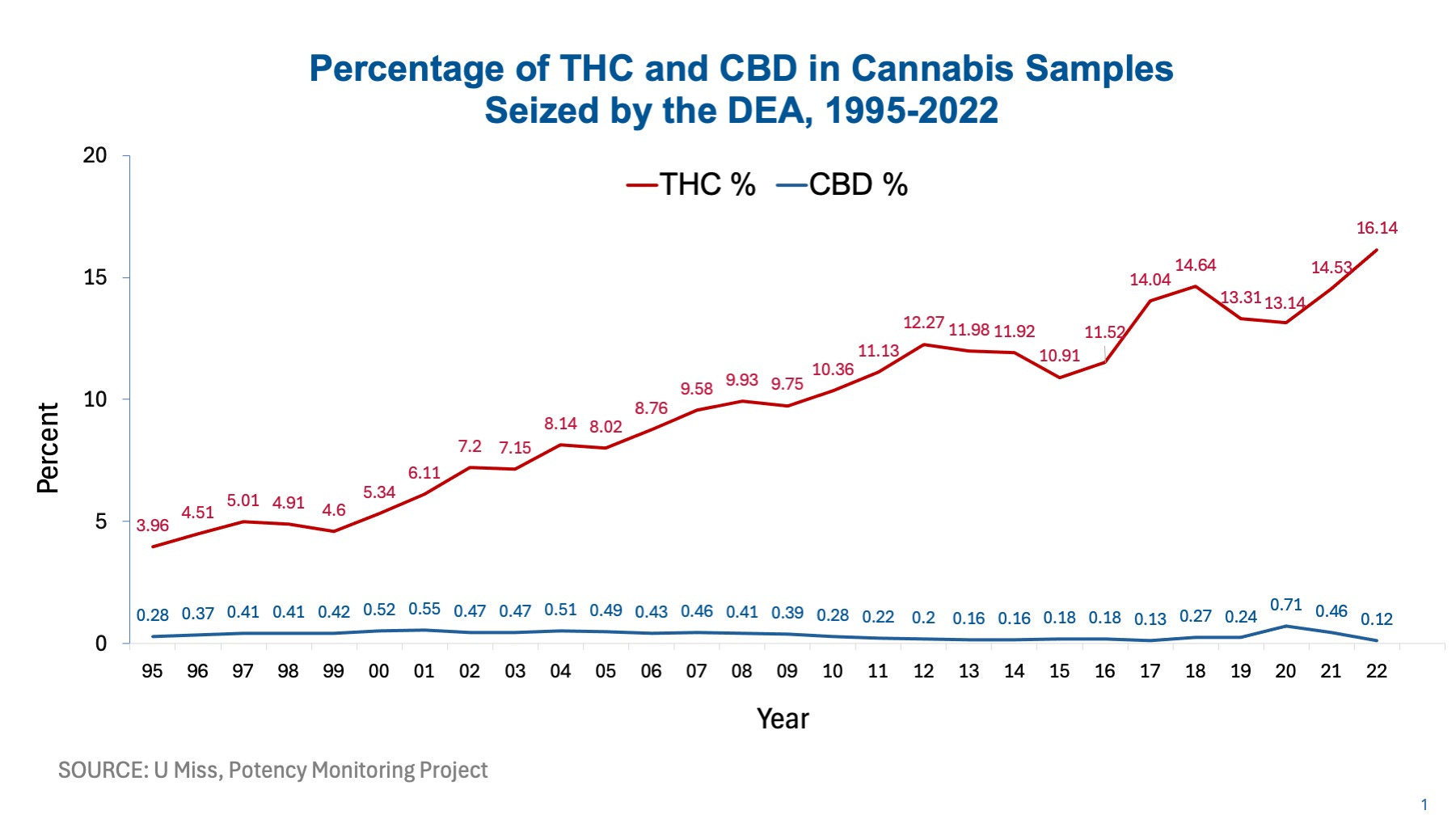
Data from marijuana seizures shows the THC content of marijuana in the 1970s was 1-2%. In the 1990s, the average THC content was 3-4%. Today, some products exceed 20% or even 90%. This is leading to an increase in problems like CHS, mental health risks, and cardiovascular issues. Regulations vary from state to state. Within a state, it varies based on product type, from smokable flower to vape oil to edibles. Purchase limits are also used to promote public health and control resale.
We are poised for a breakthrough moment in marijuana policy. In 1970, it was placed on Schedule I for controlled substances. The criteria for this are: high potential for abuse, no accepted medical use, and lack of safe use under medical supervision. Everyone knows that’s nonsense.
The process of formally reclassifying it from Schedule I to Schedule III started under the Biden administration. A hearing was scheduled to complete the move in January, but it was delayed. Recently, the Trump administration decided to resume the process. Reclassification is likely to become a reality this upcoming year. That is only the next step in full-scale legalization.
Recently, legislation was passed to regulate hemp-related products. While it is mistargeted, it is a step in the right direction. The legislation should cover THC in general, not specifically hemp-based products. It shouldn’t be a favor to the alcohol or legal marijuana lobby. The fear is that the implementation of the legislation will kill the hemp industry and do little to regulate THC properly.
What you don’t know CAN hurt you.
When I was younger, I knew marijuana would be legal someday. That day has come in many states and soon will be nationwide as well. It’s increasingly socially acceptable to consume recreationally. It should also become increasingly acceptable to take regularly like other medications. Research is what we need to get there.
While my story is about marijuana, it could easily be about psilocybin, MMDA, or some other restricted drug. I have taken mushrooms and know for a fact that, in the right setting, it could be therapeutic. Studies have shown this to be effective for veterans with PTSD.
You can’t put the genie back in the bottle.
People are suffering needlessly due to both unsafe products and unavailable products and treatments. There are tons of stories like mine and my daughters’. People are looking for solutions and running their own experiments.
These substances pose risks, like any substance we ingest, whether natural or artificial. They also have value. The only way to ensure we get more value and fewer adverse outcomes is to do the research and implement the proper regulations to unlock it. The sooner the better.